February 23, 2026
Pakistan Association of Plastic and Reconstructive Surgery (PAPRS) and China Shanghai Ninth People’s Hospital Join Hands to Advance Plastic and Reconstructive Surgery along the Belt and Road
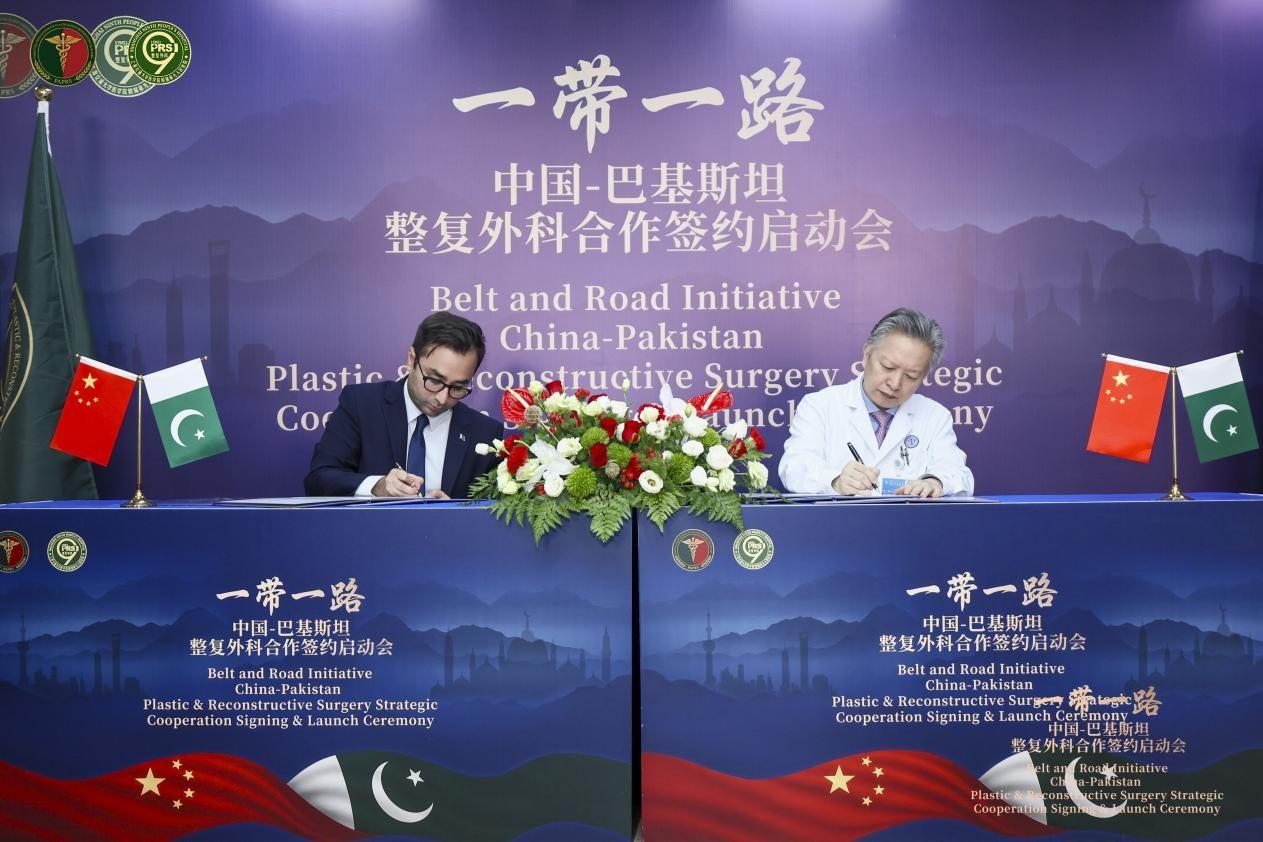
Pakistan Association of Plastic and Reconstructive Surgery (PAPRS) and Shanghai Ninth People’s Hospital, Shanghai Jiao Tong University School of Medicine, have officially launched a strategic cooperation project in the field of plastic and reconstructive surgery and held an opening ceremony for the collaboration.
The cooperation aims to improve Pakistan’s medical capacity in facial trauma management, burn treatment, and microsurgical reconstruction. Its long-term goal is to enhance medical standards, reduce disability rates, and promote the internationalization of scientific and clinical achievements.
The Department of Plastic and Reconstructive Surgery at Shanghai Ninth People’s Hospital is the largest plastic and reconstructive surgery center in Asia, receiving more than 400,000 outpatient visits annually and performing over 64,000 surgeries each year. The department has 350 inpatient beds and over 200 specialized physicians.
Over the 75 years since the establishment of diplomatic relations between Pakistan and China, the two countries have developed an all-weather strategic cooperative partnership. Entering this new phase, Pakistan and China are opening new areas of cooperation from economic development to healthcare and medical education.
Pakistan has long faced complex trauma and burn cases from conflict-affected regions, while demand for reconstructive surgery continues to grow. Under this strategic framework, PAPRS and Shanghai Ninth People’s Hospital will collaborate in microsurgical reconstruction and facial trauma repair to build local capacity.
In talent development, Chinese experts will regularly visit Pakistan for on-site and online training, while Pakistani doctors will be selected for systematic training at Shanghai Ninth People’s Hospital. Both sides will also launch Mobile Microsurgery Training Camps to deliver surgical education in remote regions.
In technology, the collaboration will introduce AI-assisted telemedicine, modernize medical infrastructure, develop standardized clinical pathways, and carry out joint research in wound repair, tissue engineering, and microsurgical nerve regeneration. Multicenter clinical studies are also planned to support evidence-based medicine.
In academic development, both sides will establish structured training and certification mechanisms, select young physicians for international professional training, organize the Pakistan–China Plastic and Reconstructive Surgery Summit Forum, and jointly formulate Pakistan–China clinical guidelines.
Mr. Khalid Mahmood Khan TSt, TI (Civ), PAPRS Chairman, emphasized the urgent need to strengthen burn care and post-blast reconstruction in Pakistan, with a humanitarian focus on underserved populations and sustainable models for developing countries.
Professor Qingfeng Li MD, PhD, Vice President of Shanghai Ninth People’s Hospital and Chairman of the Chinese Society of Plastic and Reconstructive Surgery, expressed confidence that deeper China–Pakistan collaboration will elevate both countries’ capabilities in managing complex trauma and reconstruction.
This strategic cooperation marks a major achievement in bilateral medical collaboration and is expected to significantly improve Pakistan’s trauma and burn treatment capacity while setting a new model of medical exchange between the two nations.
Both sides will continue advancing cooperation in medical technology, talent training, humanitarian missions, scientific research, and AI-driven telemedicine to support the health and well-being of people in both countries.